Delivering Reliable, High-Speed Connectivity for 3,000+ Students



 Zyxel Employee
IK Gujral Punjab Technical University
——————————————————————————————————————————————————————
Arvind Katoch, Director
M/s Rudra Enterprises
Overview
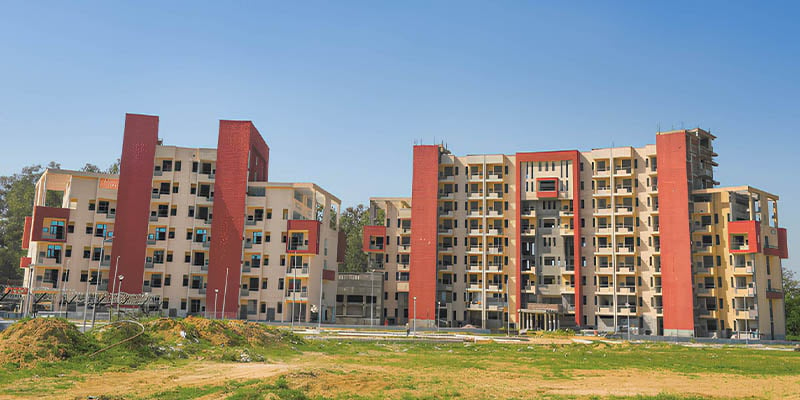
I.K. Gujral Punjab Technical University, a leading institution known for its wide academic network and more than 185 affiliated institutes, needed a network foundation that matched its growing digital ambitions. The existing setup in its three hostels couldnʼt handle the rising network traffic generated by 3,000 students, especially as online learning, research, and campus services moved deeper into the digital space.
To address this, the university teamed up with M/s Rudra Enterprises and Zyxel Networks to rebuild the entire infrastructure. The upgrade introduced a 10G fiber backbone, intelligent Layer 2/3 switching, WiFi 6 coverage across every floor, and centralized cloud-based control through Nebula.
The shift wasnʼt just an improvement; it reshaped daily connectivity on campus. Students now get fast, stable WiFi with no dead zones, system availability sits at 99.9 percent, and IT teams finally have real-time visibility instead of firefighting issues. The university now runs on a modern, scalable network built to support its academic mission and future growth.
Challenges
The university's three hostel buildings operated with a fragmented, independent network infrastructure unable to support the exponential growth in data traffic and connectivity demands from over 3,000 residential students. During peak usage hours, students experienced severe congestion, bandwidth bottlenecks, and frequent service interruptions when attempting to access online learning platforms, conduct research, or perform basic tasks. The IT team lacked centralized visibility into network performance across distributed locations, making troubleshooting time-consuming and reactive. The rapid digitalization of campus operations, from virtual classes to administrative systems, created unprecedented demand on infrastructure not engineered to handle concurrent connections from thousands of devices. The institution required not an incremental upgrade, but a complete architectural transformation, building a resilient backbone capable of supporting current demands while remaining flexible for future expansion.
Solutions
M/s Rudra Enterprises, in partnership with Zyxel Networks, deployed a comprehensive, enterprise-grade network infrastructure engineered for large-scale, high-density campus environments. The design integrates Zyxel smart-managed switches, advanced WiFi 6 access points, and Nebula cloud networking management to create a resilient, scalable, and centrally managed architecture.
The wireless layer is powered by seventy-five NWA110AX WiFi 6 access points, selected for their dual-radio 2×2 MU-MIMO capability, OFDMA efficiency, and BSS Coloring, which significantly improves performance in congested environments. With a combined throughput of up to 1.77 Gbps, these access points ensure smooth connectivity for hundreds of concurrent users. The deployment was strategically distributed with thirty-seven access points in Boys Hostel 1, twelve in Boys Hostel 2, and twenty-five in Girls Hostel, offering seamless roaming and balanced coverage across all eight floors of each building. WPA3-Enterprise, 802.1X authentication, and band-steering further enhanced wireless security and reliability.
The wired backbone centers on a fiber ring topology spanning 2,600 meters, including 600 meters of aerial routing and 2,000 meters of underground HDPE-protected cabling. At its core are three XGS1930-28HP switches, positioned on the ground floors of all hostel buildings. These switches deliver high-capacity aggregation through 4×10G SFP+ uplinks, along with a robust 375W PoE+ budget that powers connected access points and other devices. Their Layer 2/3 smart-managed features enable VLAN segmentation, QoS optimization, and enhanced traffic routing.
Extending the distribution and access layers, seven Zyxel GS1920-24HPv2 switches were deployed: three in Boys Hostel 1 (2nd, 4th, and 6th floors), one in Boys Hostel 2 (4th floor), two in Girls Hostel (3rd and 6th floors), and one in the Admin Block. Each provides 24 Gigabit ports, 4×1G SFP uplinks, and over 375W of PoE+ power, supporting access points, IP phones, and security devices without additional electrical installations.
All switches and access points are unified through the Zyxel Nebula cloud management platform, offering zero-touch provisioning, real-time monitoring, topology visualization, automated alerts, and remote troubleshooting. Nebulaʼs analytics help IT teams identify usage patterns, manage PoE budgets, and maintain maximum uptime. This deployment delivers a secure, high-availability, and future-ready campus network.
Results
With Zyxel Networksʼ enterprise-grade switches, WiFi 6 access points, and the Nebula cloud management platform fully deployed, I.K. Gujral Punjab Technical University achieved a major upgrade in campus connectivity and operations. Students across all three hostels experience reliable, high-speed WiFi without dead zones, supporting streaming, online learning, and research applications. Faculty and staff benefit from faster, more responsive data access that improves academic and administrative workflows. Nebulaʼs real-time visibility transformed IT operations from reactive troubleshooting to proactive management, allowing issues to be identified and resolved within minutes. This centralized control has reduced IT workload by nearly 65% and improved overall service efficiency.
- 70% improvement in network speed and stability across all three hostel buildings
- 99.9% system availability through redundant fiber ring topology and distributed switch architecture
- 100% WiFi coverage across three hostels with 75 access points serving 3,000+ students simultaneously
- 65% reduction in IT management overhead through the unified Nebula cloud platform
Products used
- NWA110AX WiFi 6 Access Point
- XGS1930-28HP Lite L3 Smart Managed PoE Switch
- GS1920-24HPv2 Smart Managed PoE Switch
More Information






Categories
- All Categories
- 442 Beta Program
- 3.1K Nebula
- 243 Nebula Ideas
- 6.8K Security
- 783 USG FLEX H Series
- 389 Security Ideas
- 1.8K Switch
- 87 Switch Ideas
- 1.5K Wireless
- 58 Wireless Ideas
- 7.2K Consumer Product
- 325 Service & License
- 527 News and Release
- 101 Security Advisories
- 31 Education Center
- 10 [Campaign] Zyxel Network Detective
- 5.3K FAQ
- 34 Documents
- 91 About Community
- 122 Security Highlight